The 4°C Rule: Why Your Fridge Temperature Matters More Than You Think
Deep Article3 min read
A few degrees inside your fridge decide how fast bacteria multiply. Here's what the number actually means — and how to check it at home.
Do you actually know how cold your fridge is right now? Not the dial setting — the real temperature, in degrees. Most people don’t, and most people have never checked. The dial just gets set once, somewhere in the middle, and forgotten.
That small gap in knowledge matters more than it seems. A few degrees of difference inside your fridge can be the difference between food that stays safe for a week and food that starts turning dangerous within a day.
The number behind the rule
Food safety agencies broadly agree on the target, even though the exact number shifts slightly by country: the FDA recommends 4°C (40°F) or below, the WHO’s guidance points to keeping cold food below 5°C, and most European food agencies sit in that same narrow window. Not “cold.” Not “cold enough.” Somewhere at or below 4–5°C — with 4°C as the number worth aiming for.
That precision exists because of what happens on either side of it. Bacteria that cause food poisoning — the kind responsible for the stomach illness people usually blame on “something I ate” — multiply fastest in what food scientists call the danger zone: from just above fridge temperature up to about 60°C (roughly 5°C to 60°C). Inside that range, and especially near room temperature, bacteria can double in number in as little as 20 minutes under ideal conditions. A food left out on the counter for a couple of hours isn’t just “a bit warm” — it can have gone through several doubling cycles by the time it’s noticed.
At or below 4°C, that growth doesn’t stop, but it slows dramatically. That’s the entire purpose of refrigeration: not sterilizing food, just buying it time by keeping bacteria sluggish.
Why the dial can’t be trusted
Here’s the part most people don’t realize: the number on your fridge dial (1 to 5, or “colder” to “warmer”) isn’t a thermometer reading. It’s a relative setting, and how it translates into actual degrees depends on the model, how full the fridge is, how often the door opens, and even where in the fridge you’re measuring.
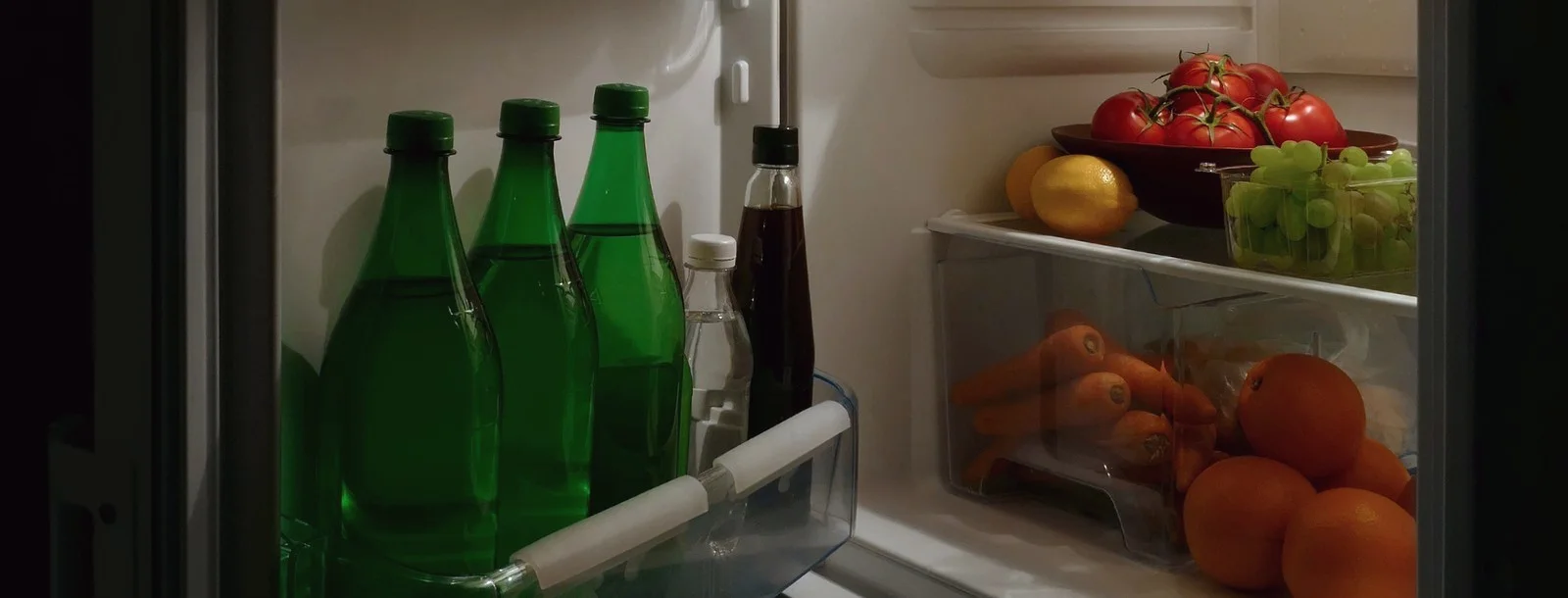
The door shelves are typically the warmest spot — often several degrees above the back of the middle shelf — which is exactly why milk and eggs, often stored in the door out of habit, are usually safer kept further inside. A fridge that “feels” cold enough can still be running at 7 or 8°C in practice, well outside the safe range, without anything looking or smelling wrong.
What this actually means for you
The fix is almost too simple: a basic fridge thermometer costs very little and removes the guesswork entirely. Place it on a middle shelf, leave it for a few hours, and check the actual number — not the dial position.
A few habits make the biggest difference once you know your real temperature:
- Keep raw meat, poultry, and fish on the lowest shelf, so they can’t drip onto other food.
- Store ready-to-eat food — leftovers, dairy, prepared meals — higher up, away from raw ingredients.
- Avoid overpacking the fridge. Airflow is part of how it stays cold; a completely full fridge can run warmer than an evenly loaded one.
- Don’t rely on smell or appearance alone. Many of the bacteria responsible for foodborne illness don’t change how food looks, smells, or tastes.
Refrigeration isn’t a switch between “safe” and “unsafe” — it’s a rate. The colder your fridge actually is, within reason, the more time you buy before bacteria that were always present start to become a problem.
Checking your fridge’s real temperature takes five minutes and one cheap thermometer. It’s one of the few food safety habits where the effort is almost nothing and the payoff — food that actually stays safe as long as you assume it does — is significant.